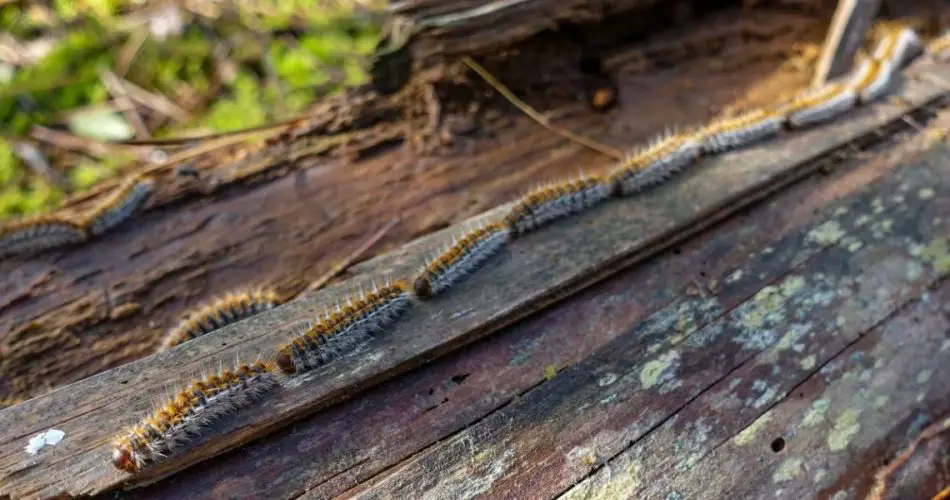
Processionary caterpillars, these small furry animals, represent a real scourge for trees, especially pines, cedars and oaks.
They are also a health threat to domestic animals and humans.
In fact, their prickly hairs can cause allergic reactions and skin irritations.
Discover how to get rid of these pests using environmentally friendly methods.
READ: Allergies in dogs: how to recognize and treat them effectively?
Identify processionary caterpillars and their life cycle.
Processionary caterpillars are larvae of the moth Thaumetopoea pityocampa.
They are characterized by their gray to brown color and their body covered in prickly hairs. Their name comes from their gregarious behavior: they walk in procession, one after the other, in search of food.
The life cycle of processionary caterpillars is divided into several stages:
Egg laying by adult moths on tree branches and needles, generally between June and September.
The eggs hatch and the first larvae appear approximately 30 days after laying.
The growth of the larvae occurs in several stages, during which they feed on tree needles and leaves.
The formation of cocoons and the transformation of caterpillars into pupae, generally between February and April.
The metamorphosis of nymphs into adult butterflies, which fly away to reproduce and lay eggs again.
Take preventative measures to prevent its proliferation.
The first step to eliminating processionary caterpillars is to act upstream, preventing their development and proliferation.
Several preventive solutions can be implemented:
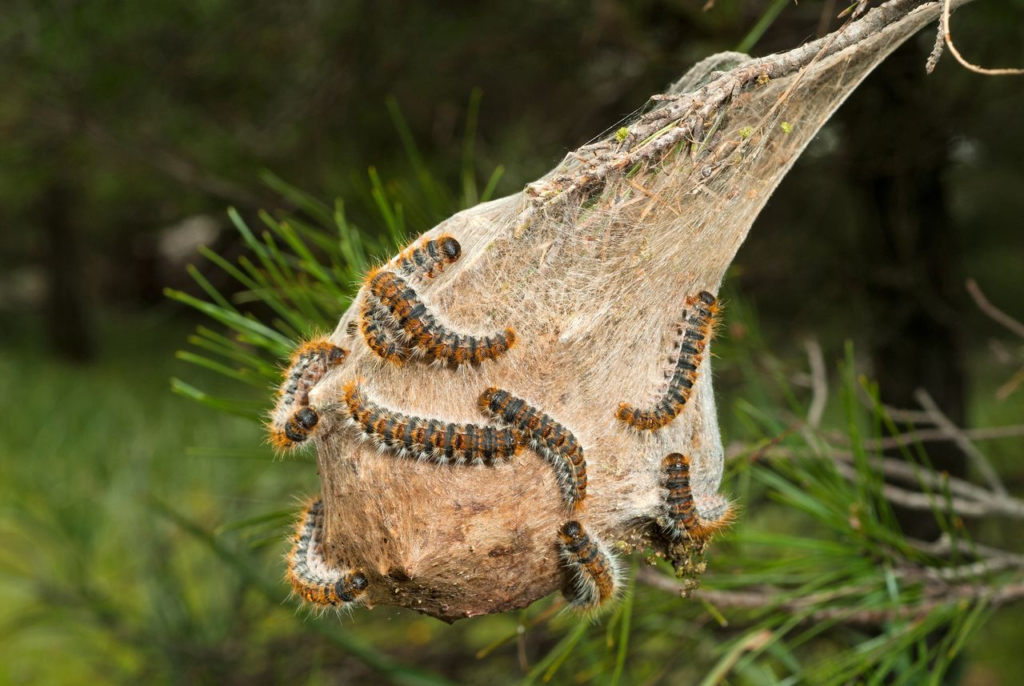
Plant-Resistant Trees: Certain tree species are less likely to be infested by processionary caterpillars, such as Scots pine, black pine, or Aleppo pine.
Install bird cages: Insectivorous birds, such as chickadees, are natural predators of processionary caterpillars. By installing nest boxes in your trees, you encourage the presence of these allies.
Give preference to biological control methods: the introduction of natural predators, such as parasitoid wasps or ladybugs, allows the population of processionary caterpillars to be regulated without the use of chemical products.
Treat trees infested with processionary caterpillars
If, despite your prevention efforts, processionary caterpillars have infested your trees, several control methods can be implemented:
Caterpillar Trap – Specific pheromone traps attract and capture adult moths before they lay their eggs. They will be installed between June and September.
Mechanical weeding: consists of manually removing caterpillar nests using a telescopic pole or pruning shears. This operation must be carried out carefully to avoid contact with sharp hair.
Biological treatment: the use of products based on Bacillus thuringiensis, a natural bacteria, allows processionary caterpillars to be infected and killed without harming the environment.
Mechanical control – Anti-caterpillar collars, also called eco-traps, can be placed around tree trunks to prevent caterpillars from descending and taking refuge in the soil to become nymphs.
Protect yourself and your animals from processionary caterpillars
The stinging hairs of processionary caterpillars can cause allergic reactions and skin irritation in humans and pets.
Therefore, it is essential to protect yourself and your animals during control operations against these pests:
Wear protective clothing – When weeding or setting traps, consider wearing gloves, safety glasses, and protective clothing to avoid contact with sharp hairs.
Pet Care: Dogs and cats are particularly susceptible to the burning hairs of processionary caterpillars. Be sure to keep them away from infested areas and seek veterinary care immediately in case of contact.
Pick up dead caterpillars: The stinging hairs of processionary caterpillars remain active even after they die. Remember to collect dead caterpillars carefully and dispose of them in an airtight bag to avoid any risk of contact.
Getting rid of processionary caterpillars is a difficult task that requires prevention and specific actions. By favoring ecological and environmentally friendly methods, you not only help protect your trees and their health, but also preserve biodiversity and the natural balance of your garden.
Do not hesitate to turn to professionals if you encounter a serious infestation, so that you can benefit from appropriate advice and effective intervention.
Finally, stay alert and informed about the methods of combating and preventing these pests, as the best weapon is knowledge.