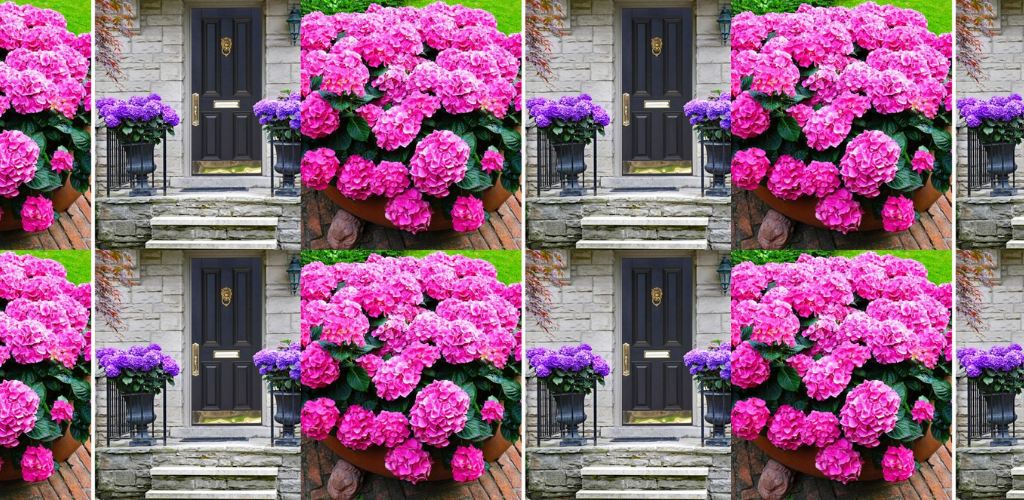
If you like flowers, plants and have a beautiful garden, in this guide we will delve into hydrangeas , one of the most beautiful and anticipated flowers of spring and summer. Hydrangeas are shrubs that grow quite easily . It is important to know that it is a plant that prefers shaded or little sun areas to live, that is, areas where it does not receive direct sunlight . Light, yes, not in full sun because it will burn its leaves and prevent flowering or quickly dry out the flowers.
The temperature at which hydrangeas grow and develop is wide. In any case, it is important to avoid exposing them to temperatures below -5ºC and above 30ºC. Extreme temperatures will cause them to freeze or burn and as a result, they will not bloom .
It is very important that, as we said before, they enjoy natural light, preferably with little light.
How to plant hydrangeas in pots, that’s what you need

Remember that hydrangeas are shrubs. This implies a great growth, in fact they can reach up to 3 meters in height . To plant hydrangeas, an important tip is to plant them in pots of at least 30 centimeters in diameter or typical long pots (minimum about 60 x 25 cm).
Hydrangeas develop many roots and require a lot of water, so a smaller pot will be uncomfortable. When planting them, make a very wide hole in the ground , place the plant in the pot and fill it halfway with the substrate. Water so that the soil is compact, then fill it with the substrate to the top. Water again. If with the first watering the substrate becomes compacted and loses some level, it is advisable to add a little more substrate to cover any stubborn roots that may have formed.
Watering hydrangeas, how to do it right
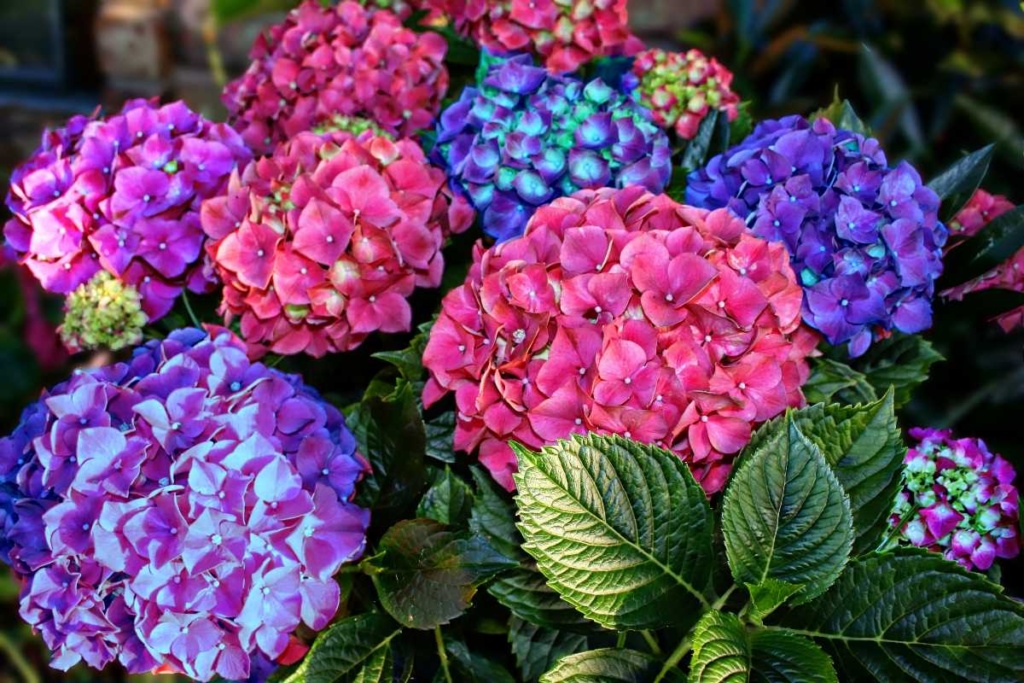
Just as important as the light conditions, if not more so, is the need to water the hydrangea . This plant requires a lot of water .
- Watering in spring and summer should be practically daily . The goal is to keep the substrate moist .
- The hydrangea’s preferred water is rainwater . In the absence of rainwater, distilled water is recommended . Tap water, especially the more calcareous ones, is not very good, as it can cause a lack of iron in the substrate and the subsequent yellowing of the leaves .
- To water hydrangeas, the best time is early morning or late afternoon (or evening). In short, when the sun is not strong, the evaporation of water can cause burns on the foliage.
- From time to time, it is advisable to spray water on the hydrangea leaves to provide moisture. In any case, it should be done when the sun sets so that its rays do not create a mirror effect that burns the leaves of the plant.
Yellow leaves of hydrangeas, it is important to use a specific fertilizer
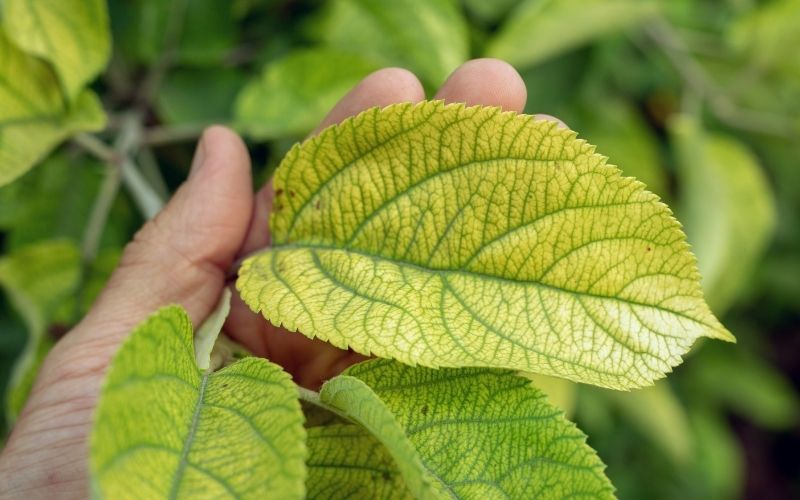
Since the hydrangea needs to be watered regularly, this will cause dilution of nutrients in the substrate, that is, we must periodically add nutrients to the substrate. The most suitable fertilizers are those specific for hydrangeas, but you can also use a slow release fertilizer. In any case, if the leaves turn yellow , especially the new ones, it will be due to a lack of iron, so it is advisable to immediately apply an iron chelate.
How to prune hydrangeas to have abundant flowering

Pruning hydrangeas every year is essential so that our plant is healthy and continues to bloom each year. Pruning hydrangeas should be done immediately after winter , to prevent frost from damaging the plant. Cutting a pruning is like a small infected wound on the plant, and frost can damage it.
To carry out pruning it is essential to distinguish the types of branches. Depending on the type of branch, they will have to be cut or not and will be cut in one way or another. In any case, the branches must be cut at an angle of 45º. The flowering branches of the previous year should be cut by a third, a couple of centimeters above some buds. As for flowers that are drying , our advice is to cut them as soon as they have wilted so that the plant does not lose strength unnecessarily.
Friends who grew up in the last year don’t touch each other ! This is very important, since young branches that did not bear flowers will most likely give rise to new flowers in the New Year. It is also advisable to cut old branches that are 3 or 4 years old so that the plant does not lose strength. For this reason, we recommend pruning 50% of these branches.
After annual pruning , it is important to fertilize the soil so that the growing period begins with a complete mix of nutrients.